Week 4 | Medicine+Technology+Art |
In our day to day lives, we fail to realize how prevalent medical technologies are in the art we consistently consume. I have personally failed to recognize just how involved medical technologies can be in relation to art.
One of the largest advancements in both the medical field and the field of the arts was the refinement of human anatomy. In fully understanding the anatomy of humans, medical professionals were able to continue innovating based on the human body, and artists were able to perfect portraits and paintings of other humans by studying this anatomy. I’ve seen both medical and arts students studying the anatomy of the human body, but I naively failed to make a connection between the two fields.
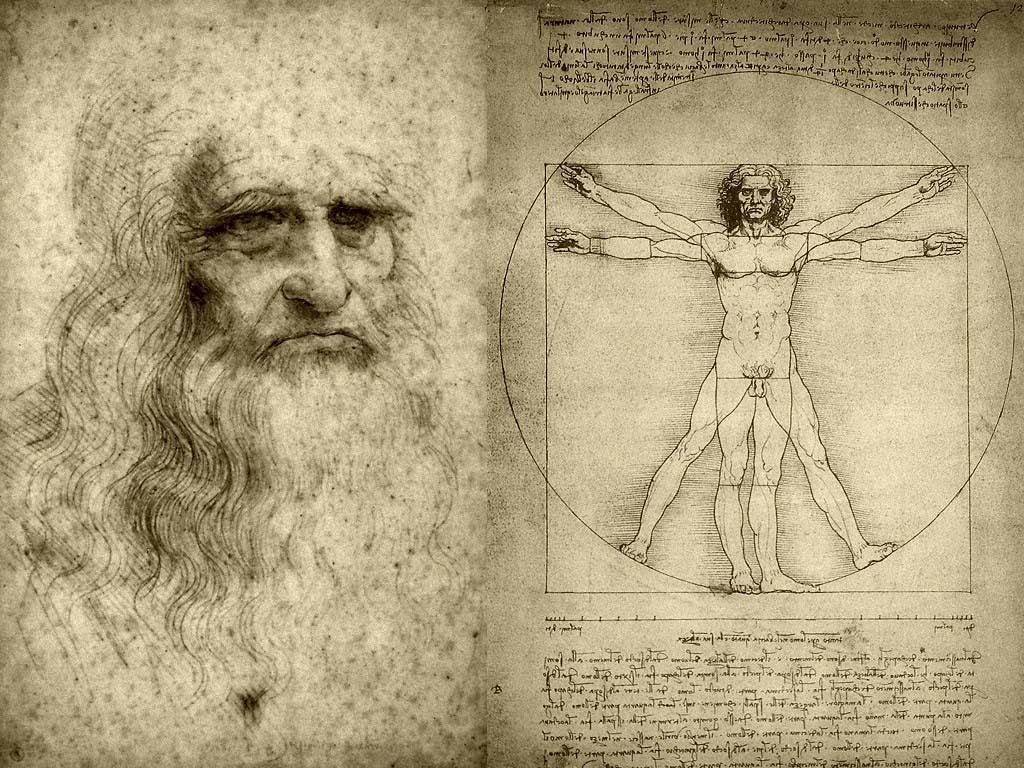 |
| Leonardo da Vinci's "The Vitruvian Man" |
Another large advancement for both fields was the introduction of plastic surgery. Prior to learning more in this week’s readings, I was under the impression that plastic surgery was specific to the medical field. Since learning, I’ve been able to better understand how plastic surgery can be a means to express yourself or even comment on society. I’ve seen how plastic surgery has caused beauty standards to fluctuate, and I’ve even seen individuals taking things to the extreme. These extremists see plastic surgery as more than just a hobby; it’s a way for them to stand up against the traditional conformities of humans.
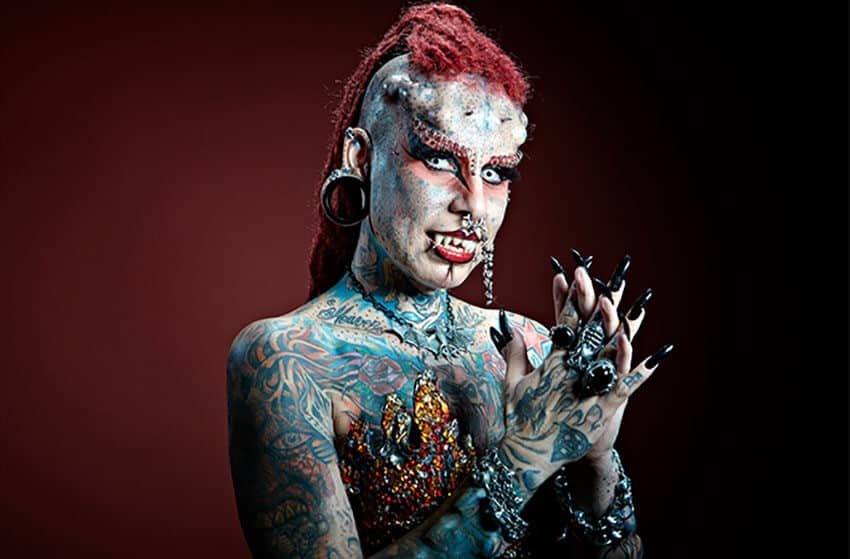 |
| Extreme Body Modifications |
In summary, I was able to learn that while art and medicine are two completely different fields, they are far from separated. Both medicine and art have had the power to positively impact the growth of the other industry.
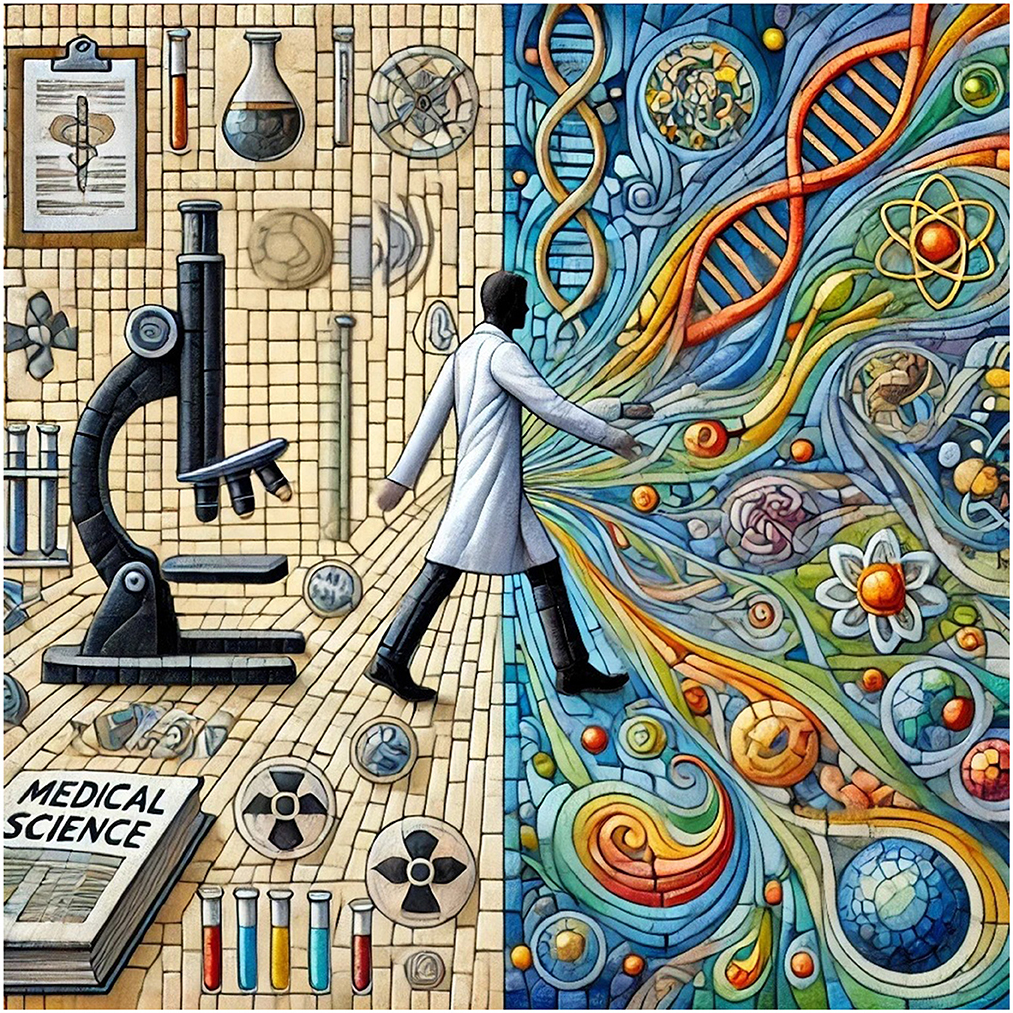 |
| Art and Medicine Collide |
Works Cited
Vesna, Victoria. Unit 4 Lecture.
McGeorge, Douglas. “Plastic Surgery: “the Ultimate Expression of Art and Science.”” Europeanceo.com, 2015, www.europeanceo.com/business-and-management/plastic-surgery-the-ultimate-expression-of-art-and-science/. Accessed 24 Apr. 2025.
Hajar, Rachel. “What Has Art to Do with Medicine?” Heart Views, vol. 19, no. 1, 2018, p. 34, https://doi.org/10.4103/heartviews.heartviews_6_18.
Science Museum. “Anatomy: Art and Science.” Science Museum, 10 July 2019, www.sciencemuseum.org.uk/objects-and-stories/medicine/anatomy-art-and-science.
Mitrousias, Vasileios, et al. “Art & Anatomy: An Everlasting Relationship Creating New Insights in Teaching Surface Anatomy.” MedEdPublish, vol. 9, no. 1, 2020, https://doi.org/10.15694/mep.2020.000023.1. Accessed 15 May 2020.
Academy, Drawing. Leonardo Da Vinci - the Anatomical Artist, drawingacademy.com/wp-content/uploads/2014-11-07_545c23d21194d_davinci.jpg.
Mexico News Daily. Jalisco Woman Continues to Hold Record for Most Body Modifications, mexiconewsdaily.com/wp-content/uploads/2022/08/body-modifications.jpg.
Frontiers. The Aesthetic Lens: Embracing Complexity through Art in Medicine and Science, www.frontiersin.org/journals/education/articles/10.3389/feduc.2025.1557637/full.


Hey Brandon, I really appreciated your reflection on the overlap between anatomy, plastic surgery, and both artistic and medical innovation. It’s such a crucial insight that often goes unnoticed. I especially liked how you described the “naive” separation of the two fields; I think many of us fall into that trap until we start looking closer. Your point about plastic surgery really stood out to me. It’s powerful to consider how procedures typically seen as purely clinical can actually become tools for self-expression or resistance against social norms. Great work!
ReplyDeleteHey Brandon, I appreciate the fact that you brought up leonardo da Vinci and the idea that the human anatomy and the studying of it led to a lot of artistic and scientific developments and they are definitely not separated completely
ReplyDeleteResponding to the part where you talk about plastic surgery and extreme body modifications. I think it's totally insane to see the evolution of these things. It started off with a simply nose job and small body changes that could be reversed. Now to see people modifying their bodies to not even look humanlike anymore has been extremely challenging but also very interesting to see the evolution to make humans look like anything, even if not 100% spot on.
ReplyDelete