Week 8: Nanotech + Art
As this week began, I was not accustomed to nanoscience at all. Through the videos provided for this week’s lectures, I was able to learn that nanotechnology has to do with producing tiny pieces of tech. The term nano refers to a billionth of a meter which is too small for the human brain to comprehend without reference.
 |
| Nanotech |
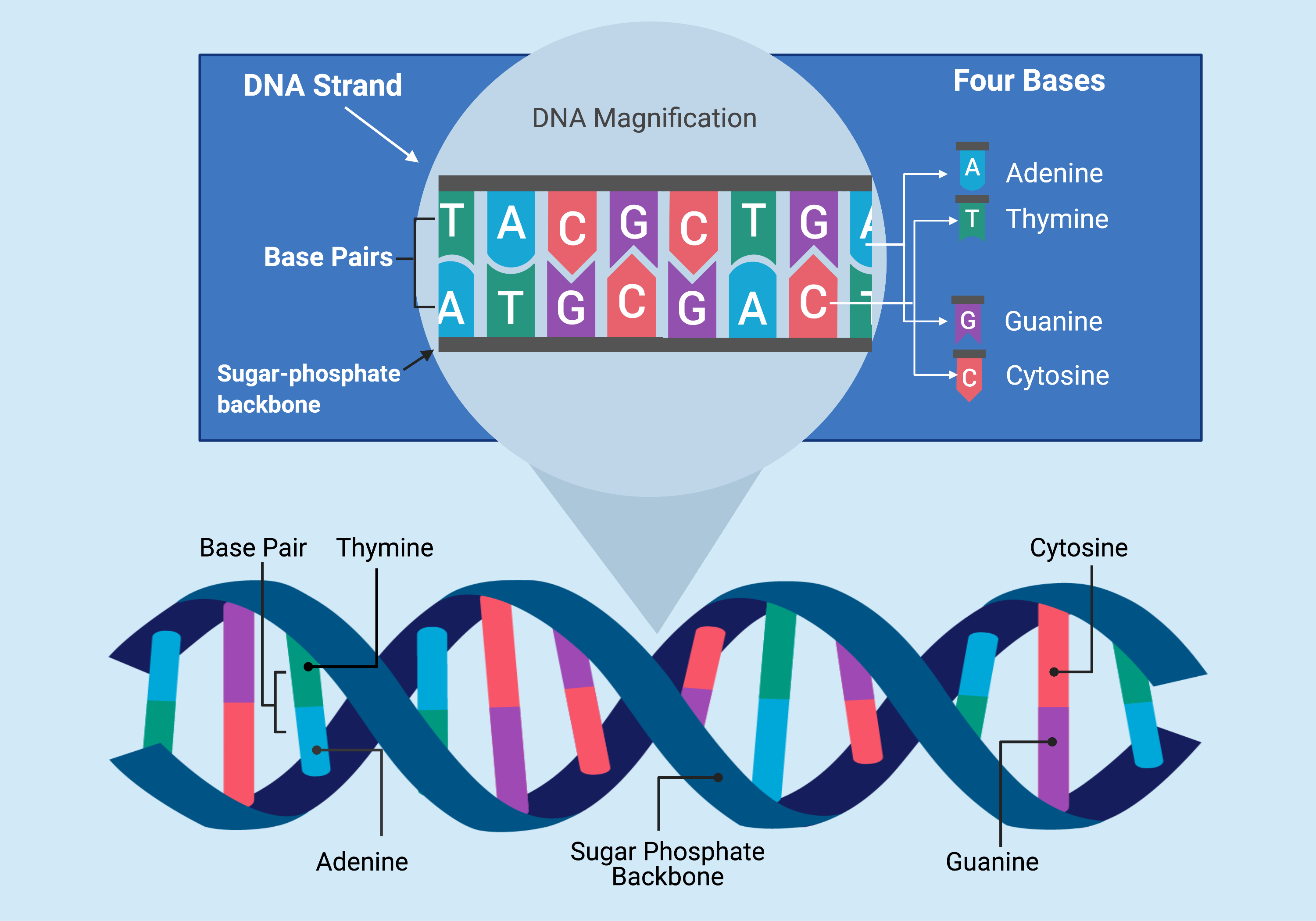
Something extremely interesting I learned about is the idea that everyone is made out of a complex series of letters that comprise DNA. In his TED talk, Paul Rothemund discusses how everyone we know can technically be described as a computer-fabricated artifact. In a way, he is trying to redefine how we identify with life and genes. He continues to discuss how each function of a cell replicates a machine we’ve created. There exist solar panels, cameras, and motors just as we see in modern technology.
 |
| Code Found in DNA |
In my own research, I was also able to learn about nanotechnology’s role in nanoart. Nanotechnology has allowed artists to gain new inspirations for the art they create on a daily basis. Artists are able to replicate everyday objects seen up close or even create their own nanoart that can only be seen under a microscope.
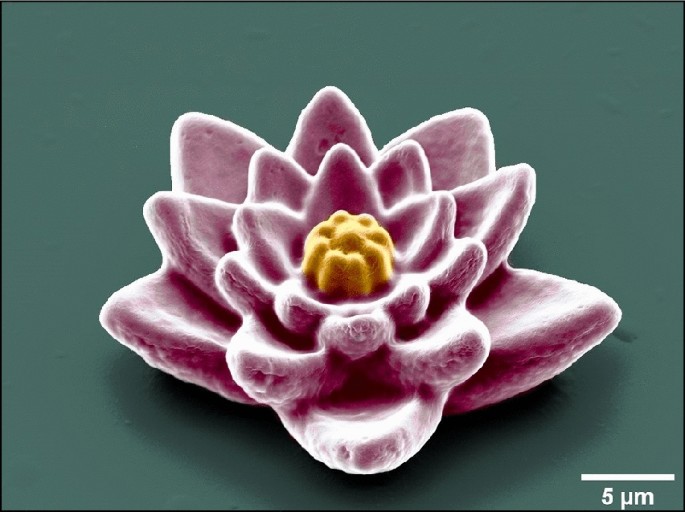 |
| La Marche des Aiguilles/ the March of the Needles made by Sara Coppola |
Nano art is a new medium where artists can further express themselves and display how advanced technology is becoming.
Works Cited
Mohsen, Abdul, and El Sayegh. “Citation: Abdul Mohsen El Sayegh (2022) the Impact of Nanotechnology on Nanoart to Create Artwork: An Analytical Study.” International Journal of Education, Learning and Development, vol. 10, no. 10, 2022, pp. 29–47, www.eajournals.org/wp-content/uploads/The-impact-of-Nanotechnology-On-Nanoart-to-Create-Artwork.pdf. Accessed 23 May 2025.
Rothemund, Paul. “DNA Folding, in Detail.” Ted.com, TED Talks, 2025, www.ted.com/talks/paul_rothemund_dna_folding_in_detail?language=en. Accessed 23 May 2025.
Kurzweil, Ray. “A University for the Coming Singularity.” Ted.com, TED Talks, 2020, www.ted.com/talks/ray_kurzweil_a_university_for_the_coming_singularity?language=en. Accessed 23 May 2025.
“Making Stuff.” Pbs.org, 2025, www.pbs.org/wgbh/nova/series/making-stuff/. Accessed 23 May 2025.
UC Online. “Nanotech Jim Pt1-6.” YouTube, 21 May 2012, www.youtube.com/watch?v=q7jM6-iqzzE.
AM, SCI. A Big Bet on Nanotechnology Has Paid Off, static.scientificamerican.com/sciam/cache/file/CFDE82EF-1DBA-4F68-B30B9D2CE59A6E33_source.jpg.
Center, Federal Judicial. Science Resources: DNA Technologies, www.fjc.gov/content/361230/DNA-basics-nucleotides-genes-genome.
Coppola, Sara. La Marche Des Aiguilles/ the March of the Needles.


Hey Brandon, I really enjoyed reading your piece on Nano art and how it can be used to create inspiration for pieces of art on such as small scale. I think designing the nano bots to perform specific tasks is very interesting and is also a form of art in itself but more of an engineering kind of art.
ReplyDeleteThis week, I gained an appreciation for the vast potential of nanotechnology, from its applications in science to its influence on art. In Paul Rothemund’s Ted talk, he highlighted how DNA can be viewed as a kind of computer code by offering a fascinating perspective on life's complexity. I also explored how nanotechnology enables artists to create nono art by blending science and creativity to craft microscopic worlds visible only under powerful magnification. This shows how nanoscience is reshaping both our understanding of biology and methods of artistic expression.
ReplyDeleteHi Brandon, I enjoyed your reflection about DNA being like computer code and how nanotechnology mirrors systems we’ve already created in modern machines. It reminded me of what Dr. Gimzewski discussed in his lectures about ancient Roman pottery and stained glass using nanosized particles. Artists have been using nanotechnology for centuries, and it’s interesting to see how both art and science are linked through scale and structure.
ReplyDelete